Why Your Smartphone Might Not Be Enough
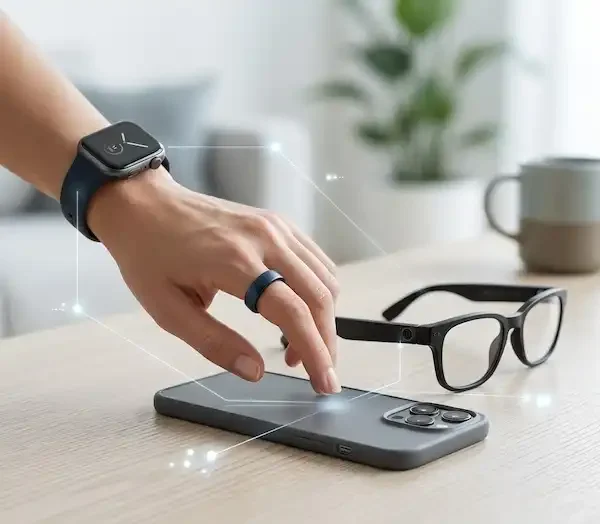
I’ve spent years testing these gadgets, and I’ll tell you something the marketing departments won’t: most people are perfectly happy with just a smartphone. However, “happy” and “optimized” are two different things. If you’re trying to decide if you need more hardware strapped to your body, you have to look past the flashy OLED screens and focus on how much friction a device adds to your life versus how much it removes.
When we talk about wearable tech for non-tech users, the “ecosystem” can feel like a trap. But when used correctly, adding a wearable isn’t about having more gadgets—it’s about having to look at your phone less.
The Smartphone: Your Digital Base Camp
Let’s be honest: the smartphone is the greatest “all-in-one” tool ever invented. It’s your camera, your map, your bank, and your connection to the world. For a huge segment of the population, it is the only device they will ever need.
Why it’s enough: If you carry your phone in your pocket, it’s already doing the heavy lifting. It tracks your steps using an internal accelerometer. It maps your morning walk via GPS. It handles your music. For many, this is the most basic form of wearable tech for non-tech users, even if it’s in a pocket rather than on a wrist.
The “Friction” Factor: The problem with the “phone-only” lifestyle is that it’s high-friction. To check a notification, you have to pull the device out, unlock it, and—more often than not—you get sucked into scrolling through apps you didn’t intend to open. This is where the broader market of wearable tech for non-tech users actually becomes a “minimalist” choice.
The Smartwatch: The “Filter” for Your Life
I often tell people that a smartwatch is like a personal assistant that lives on your wrist. For someone looking into wearable tech for non-tech users, the primary value of a watch like the Apple Watch or a Samsung Galaxy Watch isn’t the apps—it’s the filtering.
Industry Insider: The “Glance” Economy
In the industry, we talk about the “glance.” A smartphone requires an “engagement.” A smartwatch requires a “glance” (look at wrist, dismiss). This saves the average person about 40 minutes of “accidental” screen time per day. This efficiency is why the smartwatch remains the most popular form of wearable tech for non-tech users.
Real-World Benefits:
- Safety First: If you trip or fall, most modern smartwatches can detect the impact and call emergency services automatically. Research indicates that fall detection is a critical lifesaver for those with mobility issues.
- The “Leash” Effect: You can leave your phone on the charger and still get a vibration for important texts. This is a key reason many explore wearable tech for non-tech users.
Smart Rings: The “Set It and Forget It” Choice
If the idea of charging a watch every night sounds like a chore, the smart ring is the answer. This is a burgeoning category in the world of wearable tech for non-tech users because it’s “invisible.”
Why a Ring Beats a Watch for Some
I’ve worn the Oura Ring for months, and the biggest realization is how much better it is for sleep. Most people find wearing a bulky, glowing watch to bed uncomfortable. A ring is passive. It sits there, monitors your heart rate variability (HRV), and tells you if you’re getting sick. Recent studies have shown that rings often achieve higher sleep-staging accuracy than wrist-worn devices, making them a top-tier choice for wearable tech for non-tech users focused on health.
Smart Glasses: The New Frontier
You might think smart glasses (like the Ray-Ban Meta) are for sci-fi fans, but they are surprisingly practical. As far as wearable tech for non-tech users goes, these are for the “lifestyle documenter.”
- Hands-Free Memories: Instead of reaching for your phone and viewing a birthday party through a screen, you just tap the frame. You stay present while the glasses do the work.
- Open-Ear Audio: You can listen to a podcast while still hearing the world around you. This blend of utility and simplicity is what makes these a rising star in wearable tech for non-tech users.
Making the Choice: The “User Profile” Test
To decide what you need, find which profile fits you best:
- The “Minimalist”: Stick with the phone. Don’t let anyone talk you into gadgets you won’t wear.
- The “Safety-Conscious”: A smartwatch is your best bet for the security of fall detection.
- The “Health Optimizer”: Go with a ring. It’s the most sophisticated health tracker that doesn’t feel like a computer.
The growing variety of wearable tech for non-tech users means there is finally an option for people who hate “techy” things.
FAQ
Q: Do I need a data plan for these devices? A: Generally, no. Most wearable tech for non-tech users uses Bluetooth to connect to your phone’s existing data plan.
Q: Are these devices waterproof? A: Most watches and rings are water-resistant to 50 meters. Smart glasses are usually only “splash resistant.”
Q: How often do I have to charge them? A: Watches usually need a daily charge, while rings last about a week.
Final Thoughts: Don’t Buy the Hype, Buy the Utility
The tech industry wants you to buy all four. But here is the truth: Start with the problem you want to solve.
Whether it’s a watch, ring, or glasses, the goal of wearable tech for non-tech users should be to make your life simpler, not more complicated. That smartphone in your pocket is a miracle of engineering—don’t feel pressured to add more unless it genuinely makes your day easier.
Additional Helpful Information
- Do you really need a smartphone and smart ring – Galaxy Watch 9 and Ring 2: Do You Really Need Both in 2026?
- How to improve productivity with wearable devices – Executive Wearables: How Smart Productivity Ecosystems Drive Corporate Edge